“techniques for growing coffee trees” search results (400)

African Rwanda coffee beans how to drink Rwanda hand-brewed coffee parameters coffee beans taste flavor
Because of the dense mountains and humid climate in Rwanda, the coffee beans produced in Rwanda are rich in aroma, naturally fruity and floral. There are five major coffee producing areas in Rwanda, and the coffee produced in these five regions is slightly different in aroma and taste. The coffee from Rwanda tastes sour, but it has a lingering aftertaste. Good coffee is like Chinese tea, it feels sweet only after drinking it. Mustafa method
2016-04-26 Consult Rwanda how delicious hand brew coffee origin personality unique Africa
Description of Coffee Flavor in Costa Rica Goddess Manor introduction to the characteristics of Grinding degree of varieties
High-quality Costa Rican coffee is called extra hard beans, and this kind of coffee can grow at an altitude of more than 1500 meters. Altitude has always been a problem for coffee growers. The higher the altitude, the better the coffee beans, not only because the higher altitude can increase the acidity of the coffee beans and thus increase the flavor, but also because the night temperature at the higher altitude is lower, which can make the trees grow slowly.
2016-09-28 Costa Rica goddess manor coffee flavor description variety grinding taste
Culture methods of potted Coffee trees the growth process of coffee trees
There are many coffee plants in Yunnan, and they are of good quality. This is the help given by the unique climate. The purpose of planting coffee trees is to harvest high-quality coffee beans, but the cultivation process is very strict, and it can be said that appropriate climatic conditions are needed: sunshine, rainfall, soil, air temperature, as well as the way coffee beans are harvested and the production process. Will affect the quality of the coffee itself.
2015-11-05 Potted plants coffee farming methods growth processes we Yunnan many planting
What are the main types of coffee beans
[Catuai Kadu Aikaduai Aica Dewey] (Caturra Kaddura and Mondu Novo New World artificial hybrid coffee varieties. The tree height of Caturra is shorter than that of Mundo novo, and the improved height is more convenient to harvest after mixing. The sweetness performance is similar to that of Cattura, and there is a great correlation between fertilization techniques. With high planting density, high yield can be achieved by proper fertilization.
2016-06-02 There are several kinds of coffee beans.
Costa Rican coffee producing place
This coffee producer, with all grades and types of coffee, accounts for 1/3 of the global consumption and accounts for a share of the global coffee market, although the natural disasters faced by Costa Rica are several times higher than those in other regions. but its arable area is enough to make up for it. There are many kinds of coffee here, but its industrial policy is abundant and cheap, so it is excellent.
2016-06-01 Costa Rica coffee place of production this various grades species
Coffee training topic Organic Coffee beans
Only a small part of the world's coffee is truly organic certified coffee, because the certification process takes a long time, about three years. And such a deal would reduce coffee production by as much as 50%. So when coffee growers decide to do organic certification, it means that a time-consuming and costly investment begins. Many people think that when coffee is growing, only
2014-10-08 Coffee knowledge coffee beans organic coffee beans
Zero-distance contact with coffee
Finally, I have an opportunity to witness the formation of coffee. This is after visiting MONTENEGRO National Coffee Park in QUINDIO province of Colombia and a garden coffee farm in MANIZALES city of Caldas province (CALDAS).
2014-06-17 Coffee knowledge Coffee Encyclopedia Coffee training
The growing environment of coffee beans how to grow coffee beans
First, planting time: April 15-25 period. Second, planting location: plain, hillside, wasteland, front and back house, forest and fruit tree seedlings can be planted, but should not be planted in tall trees or other unventilated places. Third, coffee does not like water and fertilizer, conditional planting can use farm manure, during the growth period, if the drought watering 1-2 is the best, absolutely do not allow the use of various chemical fertilizers and weeding
2016-06-06 Coffee beans planting environment how time April 15 -25
Basic knowledge of Fine Coffee basic knowledge of coffee tree planting
Coffee comes from Ethiopian curry. In Colombia, it was brought by a priest from the French Antilles via Venezuela in 1808. At present, Colombia is the fourth largest coffee producer in the world, behind Brazil, Vietnam and Indonesia. There are four types of coffee trees in the world, namely, ARABICA, ROBUSTA and LIBERICA.
2015-03-18 Boutique coffee basics common sense planting origin Ethiopia caffeine
Coffee classroom: the difference between Arabica and Robusta coffee beans
The world's coffee beans are mainly divided into two categories: small seed coffee bean Arabica Arabica and medium grain coffee bean Robusta Robsta. Small seed coffee beans grow in the temperate and tropical climate of Haiba 600-2000 meters, with rich and delicate taste, strong smell, high acidity and smooth texture, bringing strong aroma and smoothness to the coffee.
2015-03-05 Coffee lecture hall Arabica Robusta coffee beans difference all
What's the difference between Arabica and Robusta?
The world's coffee beans are mainly divided into two categories: small seed coffee bean Arabica (Arabica) and medium seed coffee bean Robusta (Robusta). Small seed coffee beans grow in the temperate zone and climate of Haiba, with a rich and delicate taste, strong smell, high acidity and smooth texture, bringing strong aroma and smoothness to the coffee. Medium seed coffee bean is just like its English name Ro.
2015-11-02 Arabica Robusta what the difference the whole world coffee beans
There are four types of coffee trees. Coffee comes from Ethiopia.
Coffee comes from Ethiopian curry. In Colombia, it was brought by a priest from the French Antilles via Venezuela in 1808. At present, Colombia is the fourth largest coffee producer in the world, behind Brazil, Vietnam and Indonesia. Finally, I have an opportunity to witness the formation of coffee. This is a visit to QUINDIO, Colombia.
2015-07-28 Coffee tree species total four categories from Ethiopia from Ethiopia.
Brief introduction of organic coffee beans three famous coffee beans
Introduction to organic coffee beans in many parts of the world, growers use pesticides to control the growth of coffee pests, and moist and foggy coffee at high elevations are more vulnerable to pests, so growers often use pesticides to treat them. Many people think that coffee can be called organic coffee beans as long as synthetic pesticides, herbicides and chemical fertilizers are not used during coffee growth. in fact, only in third parties.
2016-06-05 Organic coffee beans introduction three big famous organic in the world
The relationship between Kenyan coffee and Arabica coffee beans
Arabica coffee accounts for about 65% and 80% of the world's coffee beans, and its excellent flavor and aroma make it the only coffee among these native species that can be drunk directly and alone. However, its resistance to drying, frost, diseases and insect pests is low, especially to the biggest natural enemy of coffee, leaf rust, so all producing countries are committed to improving varieties. For example, the well-known Sri
2016-06-05 Kenya coffee rabbi coffee beans relationships the world grow
Knowledge of planting Coffee beans there are four types of coffee trees
Coffee comes from Ethiopian curry. In Colombia, it was brought by a priest from the French Antilles via Venezuela in 1808. At present, Colombia is the fourth largest coffee producer in the world, behind Brazil, Vietnam and Indonesia. Finally, I have an opportunity to witness the formation of coffee. This is a visit to QUINDIO, Colombia.
2015-01-16 Coffee beans planting knowledge coffee tree species a total of four types derived from Ethiopia
Bolivia Coffee How to taste Growing environment Producing area Price Flavor Description Introduction
Arabica coffee cannot be grown at altitudes higher than 2000 meters, and if the altitude is too high, the coffee trees will freeze due to the low temperature. Bolivian coffee is mainly grown in the Yungas region northeast of La Paz. Bordering the Amazon River basin, it is about 1500-2500 meters above sea level and has an average annual temperature of about 10-15 ° C. Therefore, coffee growth is guaranteed.
2016-09-19 Bolivia coffee taste how grow environment region price flavor
Introduction to the characteristics of boutique coffee bean flavor producing areas in Costa Rica Coffee Goddess Manor
Coffee was introduced into Costa Rica from Cuba in 1729. Today, its coffee industry is one of the well-organized industries in the world, with a yield of 1700 kg per hectare. Costa Rica has only 3.5 million people but 400m coffee trees, and coffee exports account for 25 per cent of the country's total exports. The volcanic soil of Costa Rica is very fertile and well drained, especially in the central part.
2016-09-23 Costa Rica coffee goddess manor boutique coffee beans flavor producing area characteristics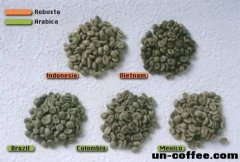
Coffee classroom: the difference between Arabica and Robusta coffee beans
The world's coffee beans are mainly divided into two categories: small seed coffee bean Arabica (Arabica) and medium seed coffee bean Robusta (Robusta). Small seed coffee beans grow in the temperate zone and climate of Haiba, with a rich and delicate taste, strong smell, high acidity and smooth texture, bringing strong aroma and smoothness to the coffee. Medium seed coffee bean is just like its English name Ro.
2014-07-23 Coffee lecture hall coffee bean classification coffee bean type coffee bean difference coffee encyclopedia
Coffee zero distance
Coffee comes from Ethiopian curry. In Colombia, it was brought by a priest from the French Antilles via Venezuela in 1808. At present, Colombia is the fourth largest coffee producer in the world, behind Brazil, Vietnam and Indonesia. End
2014-05-20 Coffee culture cafes coffee beans coffee machines
There are four types of coffee trees in the world.
Coffee comes from Ethiopian curry. In Colombia, it was brought by a priest from the French Antilles via Venezuela in 1808. At present, Colombia is the fourth largest coffee producer in the world, behind Brazil, Vietnam and Indonesia. Finally, I have an opportunity to witness the formation of coffee. This is a visit to QUINDIO, Colombia.
2015-02-03 Coffee species world tree species total four types coffee originating from Ethiopia